

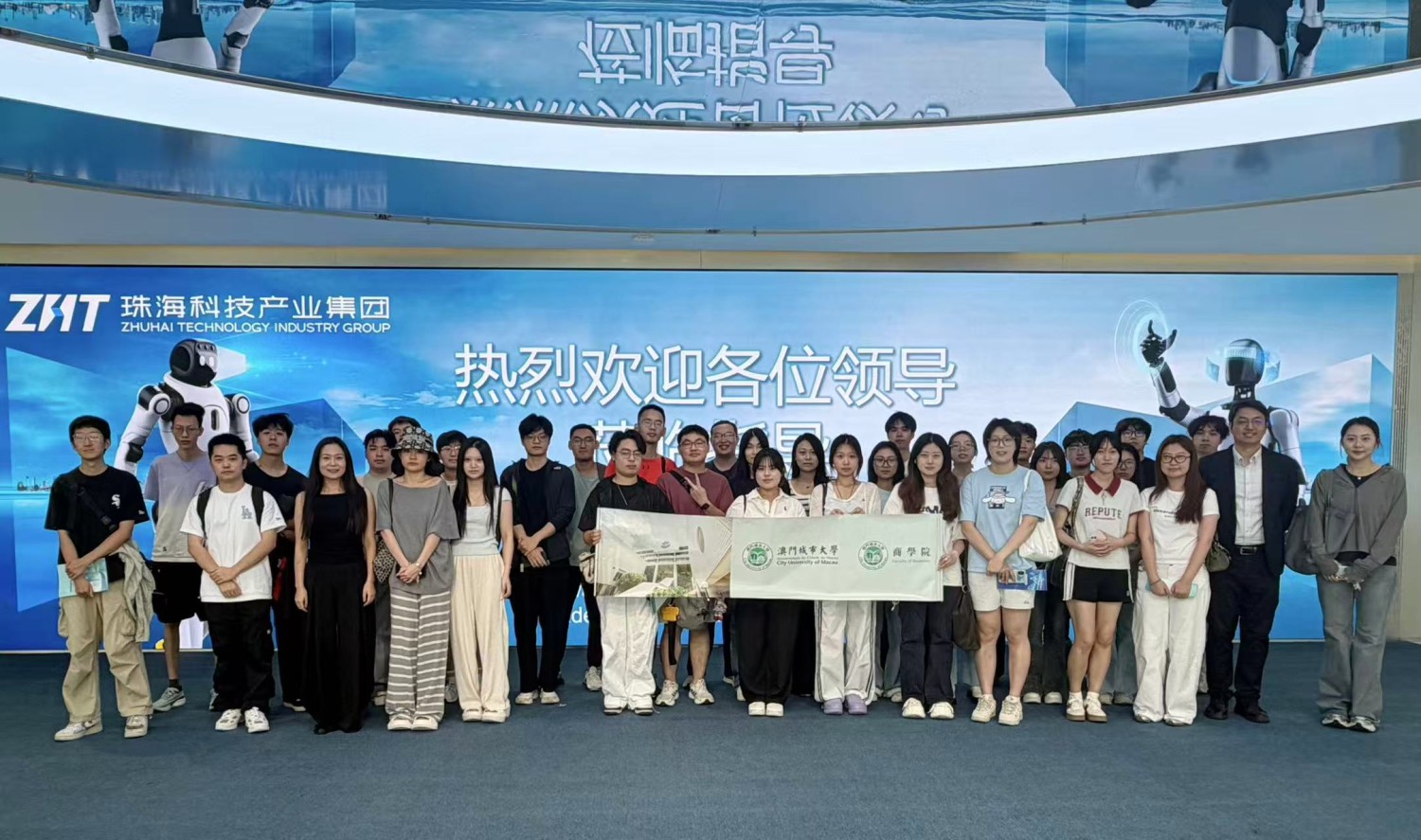
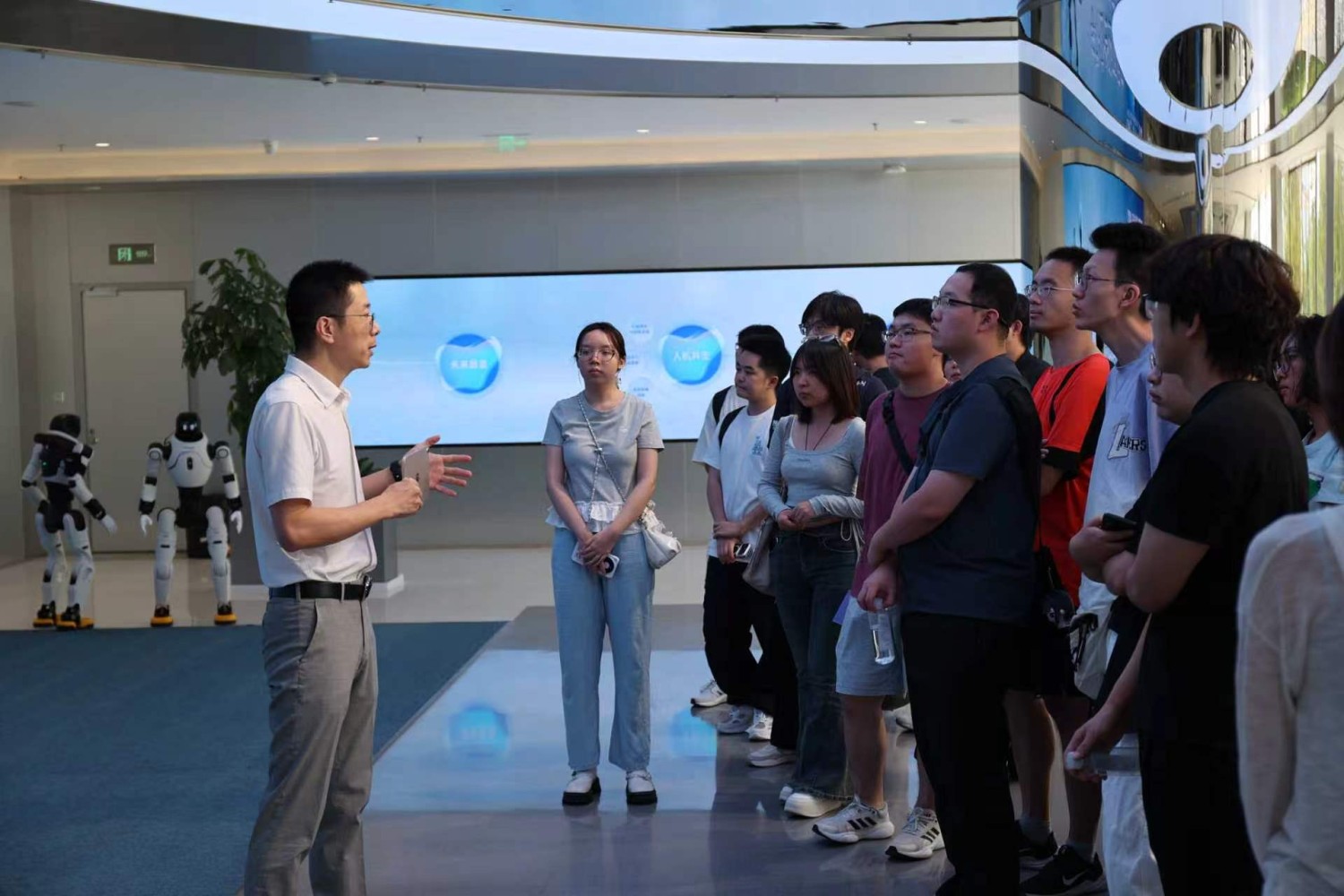
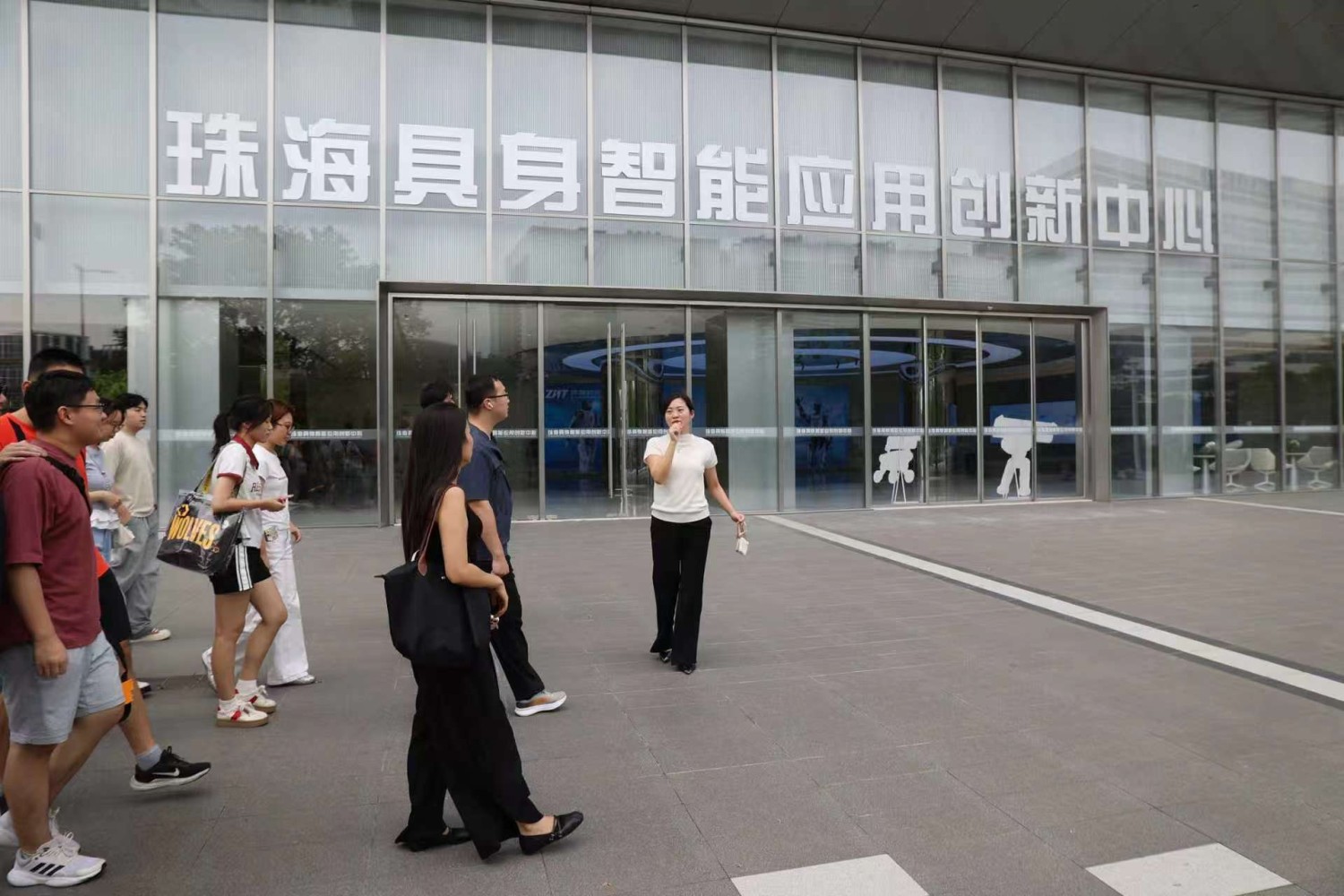
On the afternoon of 28 October 2026, Professor Yihui Tian, Associate Dean of the Faculty of Business (FOB) at City University of Macau, together with Assistant Professor Li Liu and Yafan Yu, led first-year postgraduate students in Master of Management Analytics on a visit to the AI Industrial Park of Zhuhai Technology Industry Group, to learn about the operating models and industrial ecosystem through which state-owned capital empowers AI start-ups.
Zhuhai Technology Industry Group was formed by integrating the industrial resources of two major Zhuhai municipal state-owned enterprises, Huafa and Gree. Centred on new quality productive forces, it develops three major segments: technology investment, capital operations, and industrial operations. The Group manages six industrial funds, has invested in over 2,000 enterprises cumulatively, has supported more than 200 listed companies, and operates park space totalling 5 million square metres.
Faculty and students first visited the AI OPC Base, which opened only in March this year. Designed specifically for AI start-up teams, the community has already introduced more than 30 enterprises and has built full-chain support spanning from the technological foundation to market operations. On the technology side, it provides low-cost computing boards priced in the hundreds of yuan, so developers need not build their own hardware—they can simply write programs and embed them into hardware carriers, and validate scenarios through the Embodied Intelligence Innovation Centre. On the legal side, it offers patent mining, software copyright registration, and trademark registration, as well as free handling of business registration and lawyer-reviewed contracts. On the market side, it leverages the Group's resources to match orders for resident teams. Each team can receive up to RMB 20,000 in computing subsidies, and admission follows a roadshow review system, with those passing the assessment receiving one year of rent-free space. The community has also co-organised the 2026 Zhuhai AI OPC Competition with the Zhuhai Human Resources and Social Security Bureau, with a top prize of RMB 60,000.
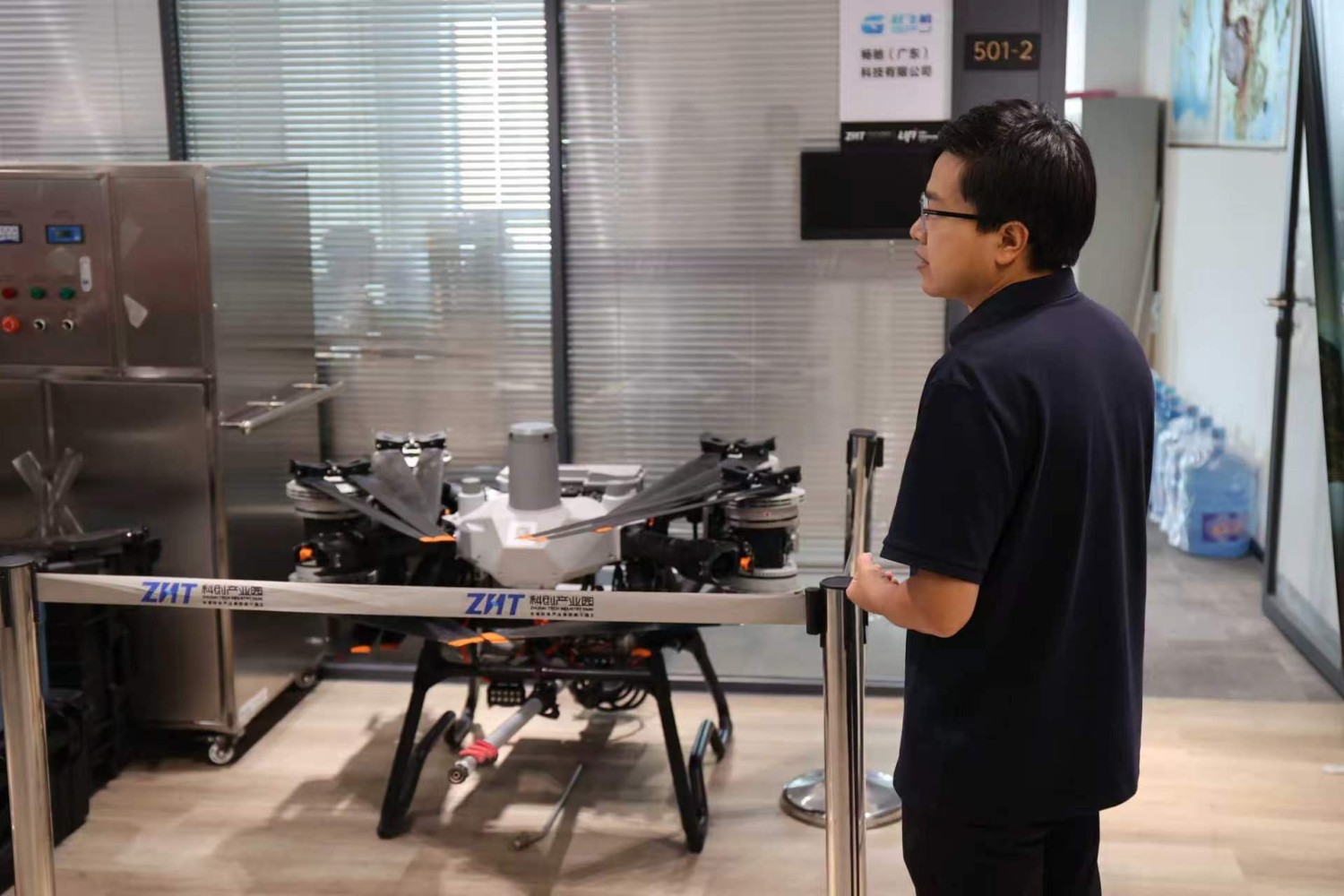
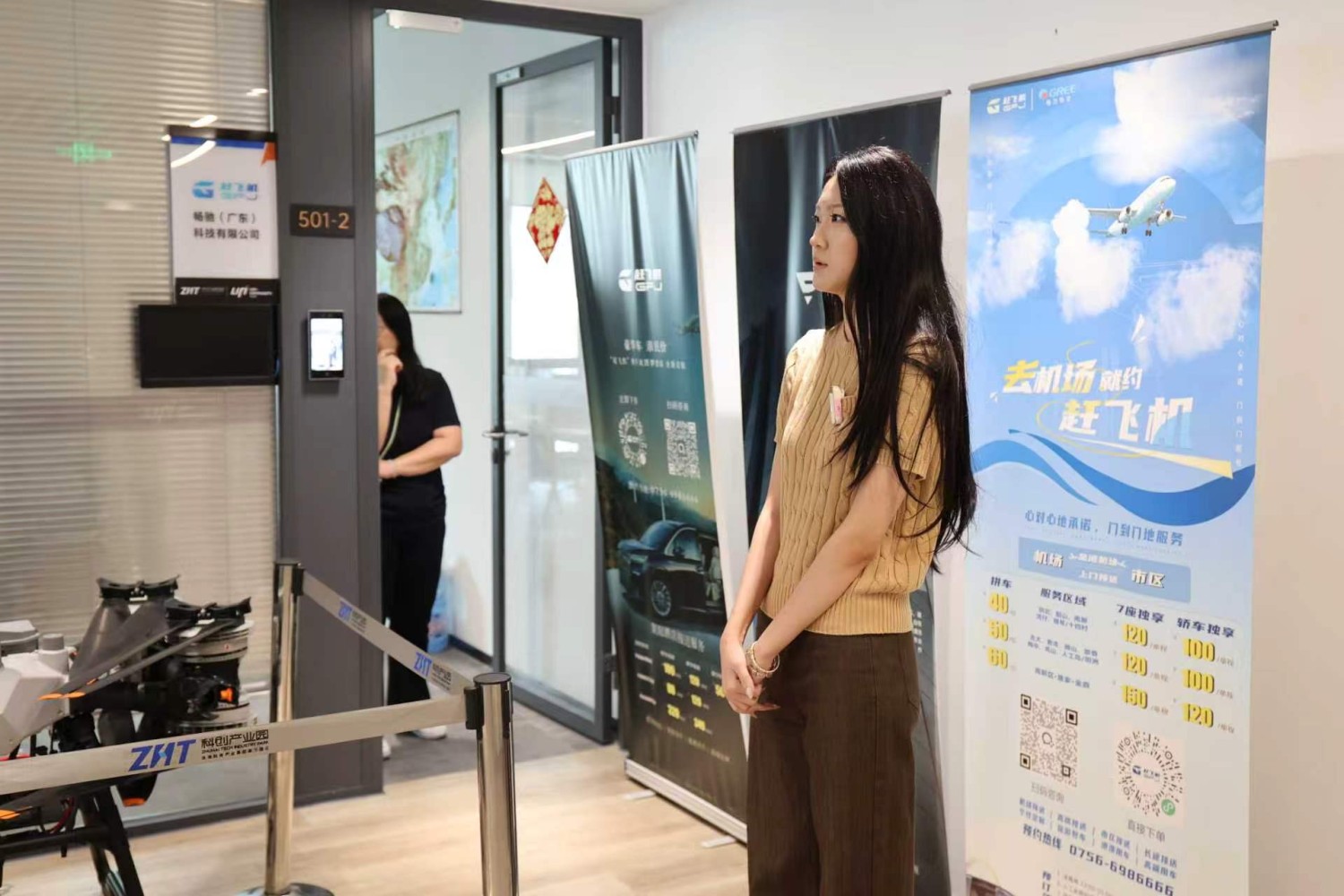
At Chaofei Technology, faculty and students observed drone and air-ground intermodal transport scenarios. Spun off from the ride-hailing platform Changchi Technology, the company proposed the concept of "air-ground intermodal transport" and is currently building a drone pilot platform: pilots register and take orders after certification, merchants place orders, and the platform settles payments. Apart from the airframe, supporting devices are all independently developed; with AI algorithms embedded, the technology has been applied to building cleaning, achieving results close to 80% of manual performance. The platform has been operating for two years and has been selected as a key supported project in the High-Tech Zone. Ms. Xiya Yang, an alumna of City University of Macau's Design Department and now Chief Designer at the company, joined as an intern in her first and second years of study and witnessed the enterprise grow from a dilapidated office into a company with government cooperation and equity investment from Peking University. She advised juniors to accumulate experience before considering entrepreneurship.
At the end of the visit, faculty and students exchanged views with a robotics company jointly invested by enterprises from Shanghai and Chengdu. The person in charge noted that the underlying technologies of robotics lean towards the natural sciences, whereas their applications belong to the social sciences; implementation in elderly care, industry, and hospital guidance all involve data assets and business model design. He advised students not to delve too deeply into underlying technologies but to focus on commercial applications and data value.
This visit provided MMA students with an opportunity to step outside the classroom and observe the industrial frontline. From the park's carrier layout and the community's full-chain support to the implementation of drones, digital humans, and robots, students gained a more concrete understanding of the path from technology incubation to commercial closure in the AI industry, and appreciated the value of interdisciplinary backgrounds and composite capabilities. Participants noted that what they saw resonated with classroom theories and laid a foundation for their studies and career planning.