

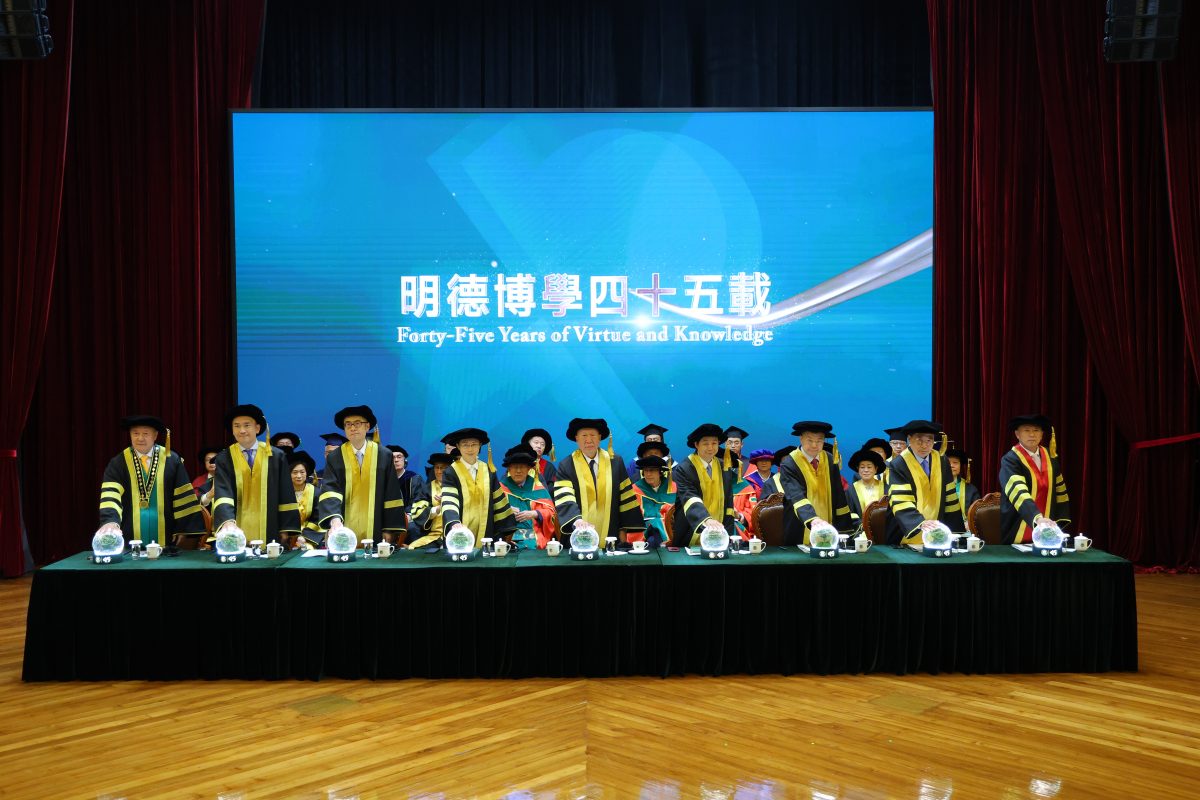
 As we celebrate CityU’s 45th anniversary it is important to note how we came to play an important role, in tandem with other universities. Collectively, we contributed to make Macau a reference in higher education in China, Asia and the World. When the University of East Asia was founded, in 1981 many had doubts that an university could prosper in Macau as nearby Hong-Kong already enjoyed well established institutions. The same was true of Guangzhou and other Greater Bay Area universities. Today, higher education students represent over 10% of Macau’s population, as many overseas students and scholars came to contribute to the development of higher education made in Macau.
How was this possible? Perhaps we can find the seeds of the current higher education standard in the history of Macau and the cultural exchange this small city hosted. When I first noticed the address of our Taipa Campus I couldn’t realize who Tomas Pereira was. Now I find that it is a very good omen that our campus sits on an avenue with his name. Tomas Pereira was a Jesuit missionary who served at the court of the Kangxi Emperor in Beijing for thirty‑six years. He was a musician, clockmaker and interpreter, playing a key role in the negotiation of the Treaty of Nerchinsk in 1689 - the first formal agreement between China and Russia. His fascination with China led him to spend the last 36 years of his life in Beijing. He is a great example, among many, of the power of knowledge to build bridges and of the role of Macau as a test bed for cooperation between East and West on science, culture and trade. But I should not take much of your time bent on the rich history that enabled the current status of this small city.
We live in a key moment of transformation that brings many hopes coupled with a high dose of anxiety. Do we still need education in a time in which we can ask anything from a machine that knows everything? Should we learn and memorize facts, events, formulas when a distant server can provide all the answers? Are there going to be any jobs left for humans in the future?
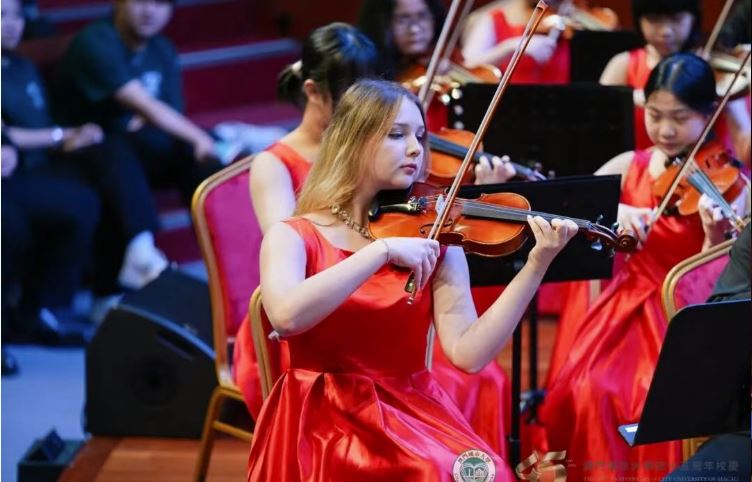
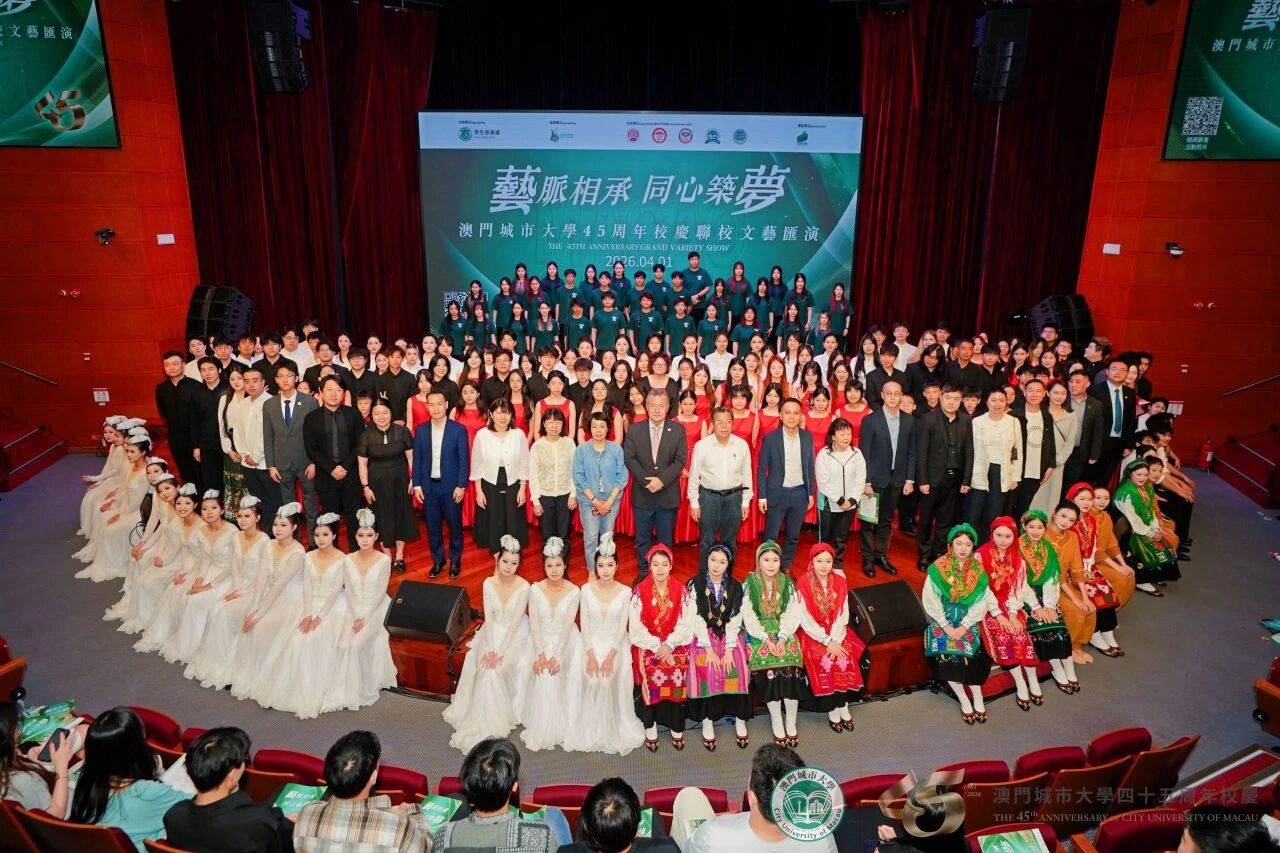
Artificial intelligence is not a distant concept—it is here, reshaping the way we live, work, and learn. In higher education, AI is already streamlining administrative tasks, personalizing learning experiences, and accelerating research. But with this transformation comes responsibility. While AI can automate, analyze, and predict, it cannot replace empathy, creativity, or ethical judgment. These are the qualities that define us as humans, and they are the qualities that higher education must continue to nurture.
The jobs of the future will demand hybrid skill sets. Technical expertise - such as AI literacy, data science, and automation - will be essential. But equally important will be soft skills: communication, leadership, adaptability, and ethical reasoning. Employers are already signaling that the most valuable professionals will be those who can bridge technology with human insight.
This is why education remains the cornerstone of future employment. Universities must prepare students not just for their first job, but for a lifetime of learning. Technology will evolve faster than any single career path, and adaptability will be the greatest asset. Our role as educators is to instill curiosity, resilience, and the ability to learn continuously.
At the same time, universities must embrace change. We must embed AI literacy across disciplines - not only in computer science, but in arts, humanities and management. We must foster interdisciplinary programs that combine technical and human skills. And we must strengthen partnerships with industry, ensuring that our curricula align with the evolving needs of the workforce and that our students develop an entrepreneurial mindset.
Education is more important than ever. A recent report by the World Economic Forum predicts that by 2030 92 million jobs will be lost but 170 million will be created. The skills with most demand include analytical and creative thinking, resilience, flexibility, agility, leadership and social influence. Precisely the skills that were so abundant in the 17th century Tomas Pereira.
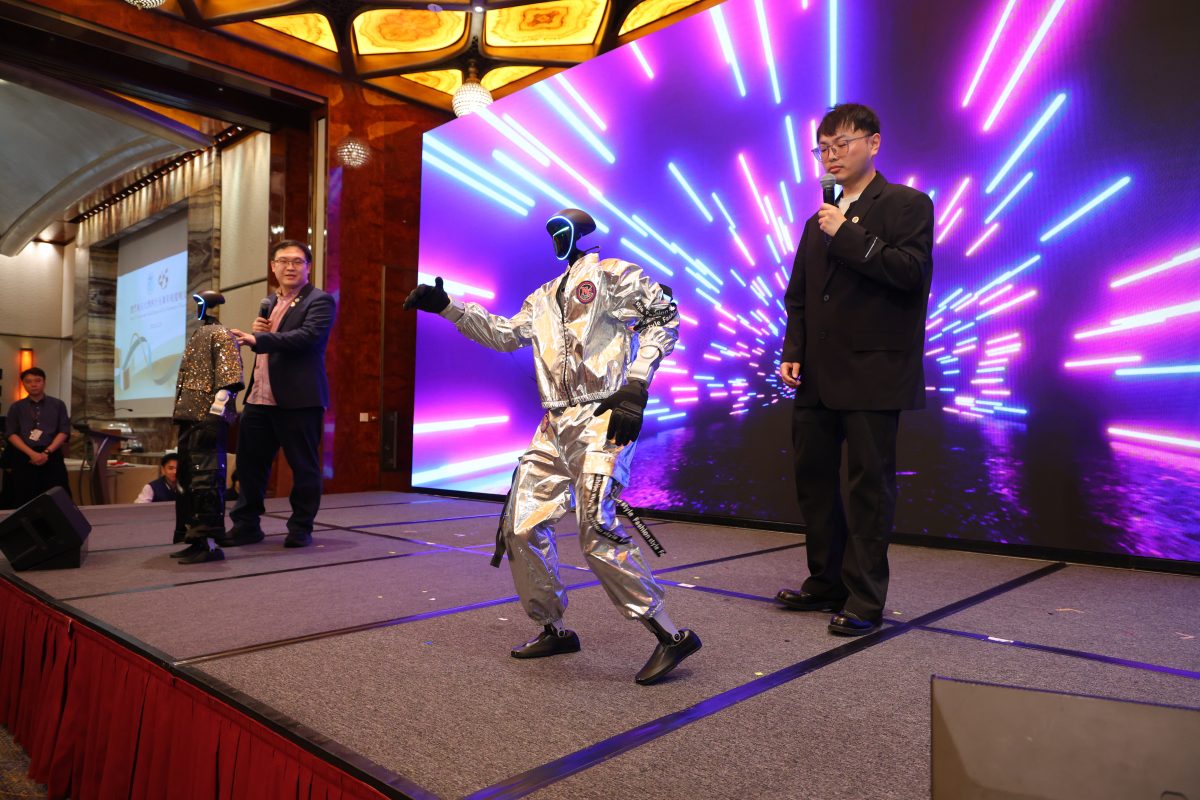 But I believe CityU Macau is uniquely positioned to lead in this transformation. Anchored on its motto of Virtue, Knowledge, Practice, CityU now serves more than 13,000 students with several tenths of thousands of alumni. The areas of specialization of CityU in digital humanities, arts, business, finance, emerging engineering, and social science disciplines are key to serve the contemporary society. They are not going to be replaced by AI, but enhanced by its usage, anchored on solid education and critical thinking.
Professor José Paulo Afonso Esperança
Macau, March 28 2026